






Geopolitical events have become one of the most important drivers, shaping financial markets faster than ever. Whenever uncertainty rises, one of the safe-haven assets that investors turn to is government bonds.

The Two-Phase Reaction: Fear vs Inflation
When geopolitical events escalate, whether in the Middle East, Europe, or between the U.S. and China, the bond market tends to react in two steps (Figure 1):
· Phase 1: Fear (Yields Fall)
o Investors buy government bonds for safety, pushing prices up and yields down.
· Phase 2: Inflation Risk (Yields rise again)
o If the conflict disrupts energy, shipping, or supply chains, traders start pricing higher inflation, lifting yields back up.
This push-and-pull effect is what makes today’s bond market so volatile.
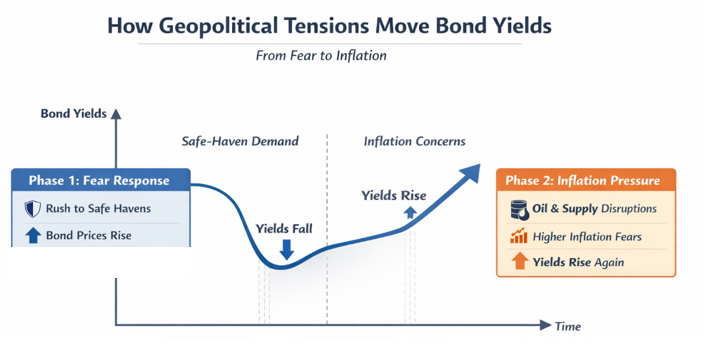 Figure 1: How Geopolitical Tensions Move Bond Yields
 US Bond Yields reacting to geopolitical tensions: Balancing Safety Demand and Inflation Fear
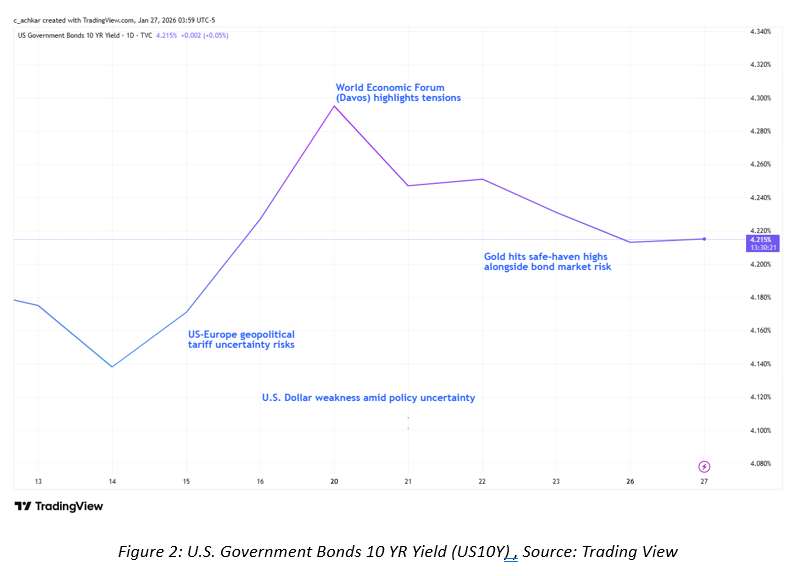
U.S. Treasury yields are reacting strongly to geopolitical headlines. Conflicts that threaten oil supply or trade routes create two opposite effects.
Why does this happen?
Geopolitical developments affect both risk sentiment (fear) and inflation expectations, as per analyst analysis.
How this happens?
· Fear pushes investors into Treasuries → yields fall
· But if oil & shipping costs rise → inflation risk increases → the Fed push rate cuts → yields rise again
For traders, keeping an eye on energy prices and inflation trends will be key to understanding where U.S. yields head next.
Europe Squeezed by Energy Shocks and Slowing Growth
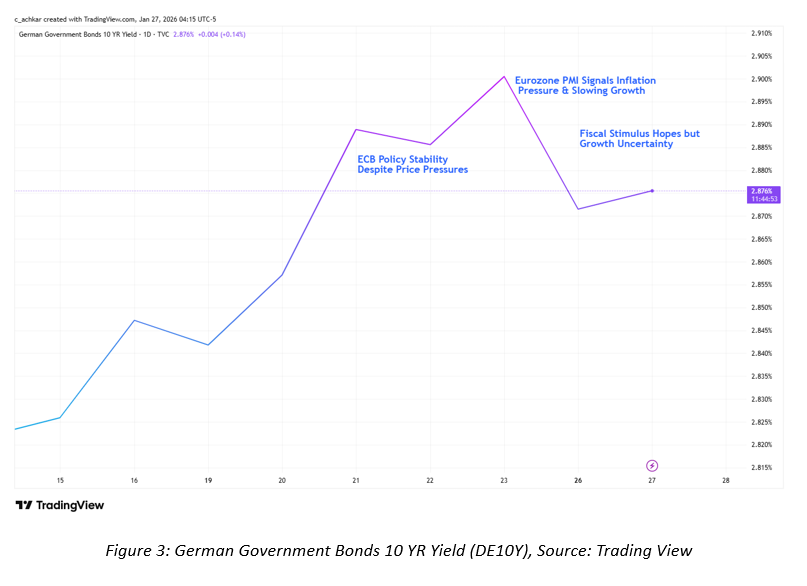
Europe faces pressure from geopolitical tensions and domestic economic weakness. Since Europe depends on imported energy, global conflicts played a major role in shaping European yields.
Why does this happen?
The energy shock could feed directly into European inflation, especially in the Eurozone, as per analyst analysis.
How this happens?
· Middle East Tensions → oil & gas fears → inflation expectations rise → interest rates rise → bond yields rise
· Weak economic data → investors buy safer bonds like German bonds
This makes energy markets and inflation updates essential indicators for anticipating the next move in European yields.
Japan’s Bond Market Shock
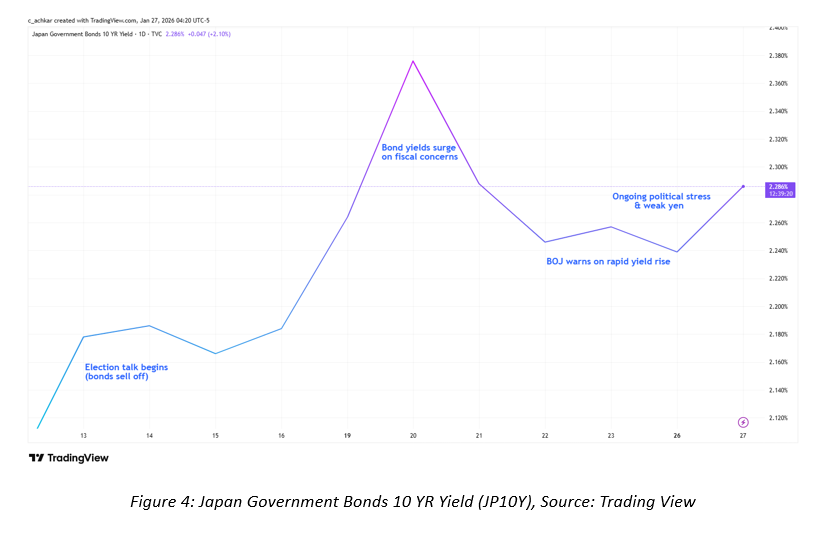
Japan’s bond market, usually quiet and stable, is suddenly moving sharply. Ahead of the February 8 snap elections, Japanese Government Bond (JGB) yields have jumped to multi-year highs. This is a major shift because Japan has been known for ultra-low interest rates for decades.
Why does this happen?
Japan is entering a new economic era with rising interest rates, large government debt, and fresh stimulus spending, as per analyst analysis.
How this happens?
- Investors expect higher BoJ rates → bond prices fall → yields rise
- Rising yields attract Japanese investors back home
- Japan holds $5 trillion in overseas investments → money may be repatriated
Goldman Sachs estimates that a 10 bps rise in JGB yields can lift U.S. yields by 2–3 bps, showing how tightly connected global bond markets are to Japan. As a result, watching JGB yield movements will be crucial for predicting how global bond markets may shift.
What Traders Should Watch Next
In the coming months, traders should focus on geopolitical risks most likely to move bond yields. Any escalation in the Middle East could disrupt oil supplies, push energy prices higher, and quickly lift inflation expectations and global yields. Tensions between the U.S. and China, especially around Taiwan, may also strain supply chains and increase market volatility.
Japan’s February 8 elections are another key event, as rising Japanese bond yields could prompt capital to flow back into Japan, reducing global liquidity and pushing yields higher elsewhere. Central banks will remain crucial: the Fed may stay cautious if inflation remains sticky, while the Bank of Japan could continue shifting away from its ultra-loose stance. Traders should also watch oil, gold, and USD/JPY, as these assets often signal bond-market direction before yields react.
-1789633462.webp)


-1787731465.webp)
-1787214523.webp)
-1724934015.webp)
