



Why Bond Yields Matter More as a New Fed Chair Takes Over
Retail investors typically focus first on equity prices: the Nasdaq-100, Nvidia, the S&P 500, cryptocurrencies, earnings surprises, and developments in artificial intelligence. But it is usually the bond market that provides the signal that matters most. With Kevin Warsh succeeding Jerome Powell as chairman of the Federal Reserve, investors must pay closer attention to Treasury rates, as they reflect inflation expectations, economic growth, rate cuts, and recessions. Warsh officially took office as Fed chair on May 22, 2026.
Bond Yields Explained: The Market’s Real-Time Risk Signal
A bond yield is the return investors demand to lend money. When bond prices rise, yields fall. When bond prices fall, yields rise. That inverse relationship is the foundation of the Treasury market. But yields are more than bond math. They are the market’s live read on inflation expectations, economic growth, Fed credibility, and investor confidence. Under a new Fed regime, this is important because traders attempt to get an idea of the aggressiveness that the new chair may have when responding to inflation or growth concerns.
2-Year Treasury Yield: The Fed Policy Gauge
The two-year Treasury yield is considered one of the top gauges of how the markets view the future direction of Federal Reserve policies. The two-year yield normally moves lower when there are expectations for rate cuts, and higher when there are no changes or tightening expected by the Fed. As at June 16, 2026, the two-year Treasury yield stood at around 4.05%. This clearly indicates that there are no signs in the markets of an immediate return to cheap money. For individual traders, the two-year yield is a proxy of Fed expectations.
10-Year Treasury Yield: The Global Discount Rate
The 10-year treasury yield can be termed as the most critical number in the financial market worldwide. The reason for this is that the 10-year treasury yield controls the mortgage yields, cost of funds to firms, stock pricing, and equity valuation. On June 16, 2026, the 10-year treasury yield was estimated to be 4.43%. An increase in the 10-year treasury yield results in an increased discount rate. Future earnings become even more heavily discounted, particularly for growth firms.
Bond Yields vs. Nasdaq 100 and Tech Stocks
The Nasdaq 100 is extremely responsive to rising bond yields since the index is made up predominantly of growth and technology companies. Artificial intelligence companies, software stocks, semiconductor companies, and mega-cap technology stocks are priced on earnings that will be realized far into the future. As yields increase, these future earnings are discounted more aggressively. This leads to lower valuations despite strong bottom lines. The ten-year yield for technology-focused portfolios is not just background noise but a core risk indicator.
Inflation, Real Yields, and Fed Chair
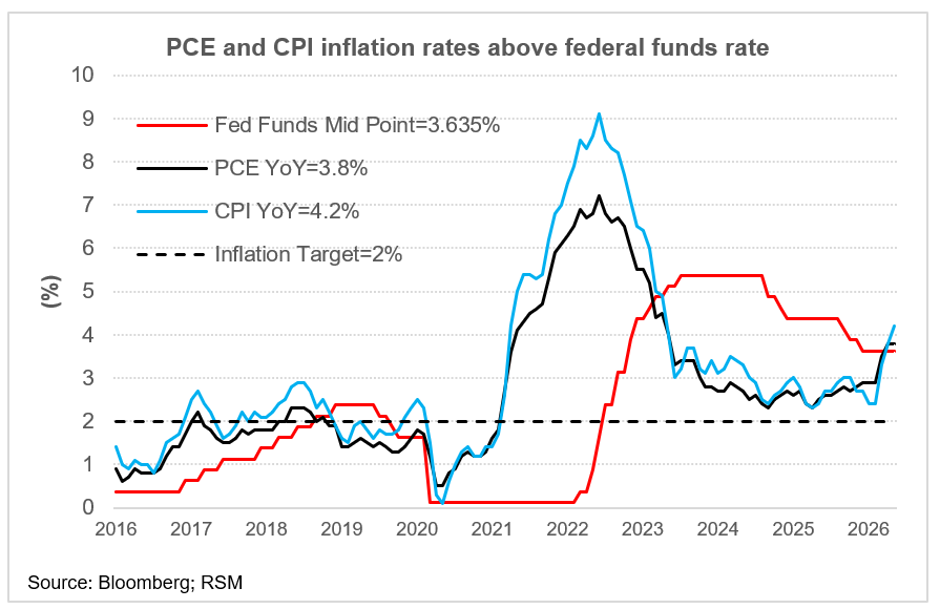
Inflation has again become the key factor behind market volatility. The most recent data from Bloomberg and RSM indicates that the Consumer Price Index increased by 4.2% during the year up to May 2026. Importantly, the PCE Price Index, which is considered the Fed's inflation indicator, increased to 3.8%. The implication of such figures has the Board of Governors of the Fed cornered. As inflation rates are not only significantly higher than the set 2.0% target but have risen above the present level of the middle point of the fed funds at 3.635%, the Fed is operating at negative real interest rates. Despite calls from equity markets for reduced interest rates, the situation does not allow much leeway.
Trading Takeaway for Retail Investors
Retail investors need to pay attention to what yields on Treasury bonds signal without necessarily becoming professional bond traders. While stock prices often indicate the optimism and growth of investors, yields of bonds often signal what the general economy expects in terms of inflation, growth rates, and monetary policies by the central bank. Given the present context of inflation and changing Fed policy, it becomes even more critical.



-Impact-on-Dollar,-Rates-&-Gold-1790852763.webp)