




The US labor market has been experiencing a noticeable slowdown in recent months, which has led the Federal Reserve to start on its trajectory of cutting down interest rates starting last September and lasting through this month. These last two cuts were in hopes of reviving the shrinking labor market as inflation remains stubborn around 3%, above the recommended rate of 2% by the Fed. This backdrop in the US labor market is largely due to US companies releasing the pedal on hiring as economic uncertainty regarding the US economy’s trajectory looms, especially as trade wars continue, inflation stays high, and a possible monetary easing challenges.
Private sector data reveals weak employment; improvement in October doesn’t change the broader picture
Latest labor market data showcased a visible slowdown in the number of job openings during the previous few months, compared to the same period last year, both in the public and private sectors. This fact clearly signals a weakened labor market across the country. According to ADP data released in September, the private sector lost around 32,000 jobs, while companies continued layoffs at the fastest pace in nearly five years. Yesterday’s ADP report has also shown slight improvement during October. However, there is not sufficient data to change the macro state of a slowing US labor market.
Government closure affects national data releases and labor / job market data
Today, the closure of the US government enters its 36th day—officially the country’s longest government shutdown in history. This could force many corporations to fire thousands of their workers, leading to more job loss in the coming period. Every week the US government remains closed, the United States’ Gross Domestic Product (GDP) loses 0.1%, which translates to billions of dollars. This would likely lead to mounting fears and pessimism around the health of the country’s economic activity, which might push companies to rely even more on AI, since the closure is forcing them, along with the Fed, to guess the state of the economy.
The Fed against inflation and a weak US job market
In its last meeting, the Fed pointed out the difficulty its members will be facing in taking December’s interest rate decision due to the ongoing halt in the extremely influential economic data releases, including that of the labor market. The Fed has also emphasized that the risks the labor market faces have increased in the last months, pointing out the central bank’s worry about what the future holds for workers and the economy alike. Nonfarm payroll data was scheduled to be released tomorrow (Friday), but with the government shutdown ongoing, the Fed may instead rely on private-sector data to gauge labor market health before making its December rate decision.
Impact of a weak and slowing down job market on the US dollar and gold
The US Dollar Index has been trying to regain its earlier levels around 100 during this year’s first quarter. This latest rise was largely a result of the Fed’s comment on halting interest rate cuts next month until key economic data is released, including US labor market data. If the US Dollar index is successful in regaining said levels and remaining above it, it might lead the US dollar to record even greater gains by the end of the year. Such a scenario will likely negatively affect gold prices after abandoning the record $4,000 levels, according to analysts.
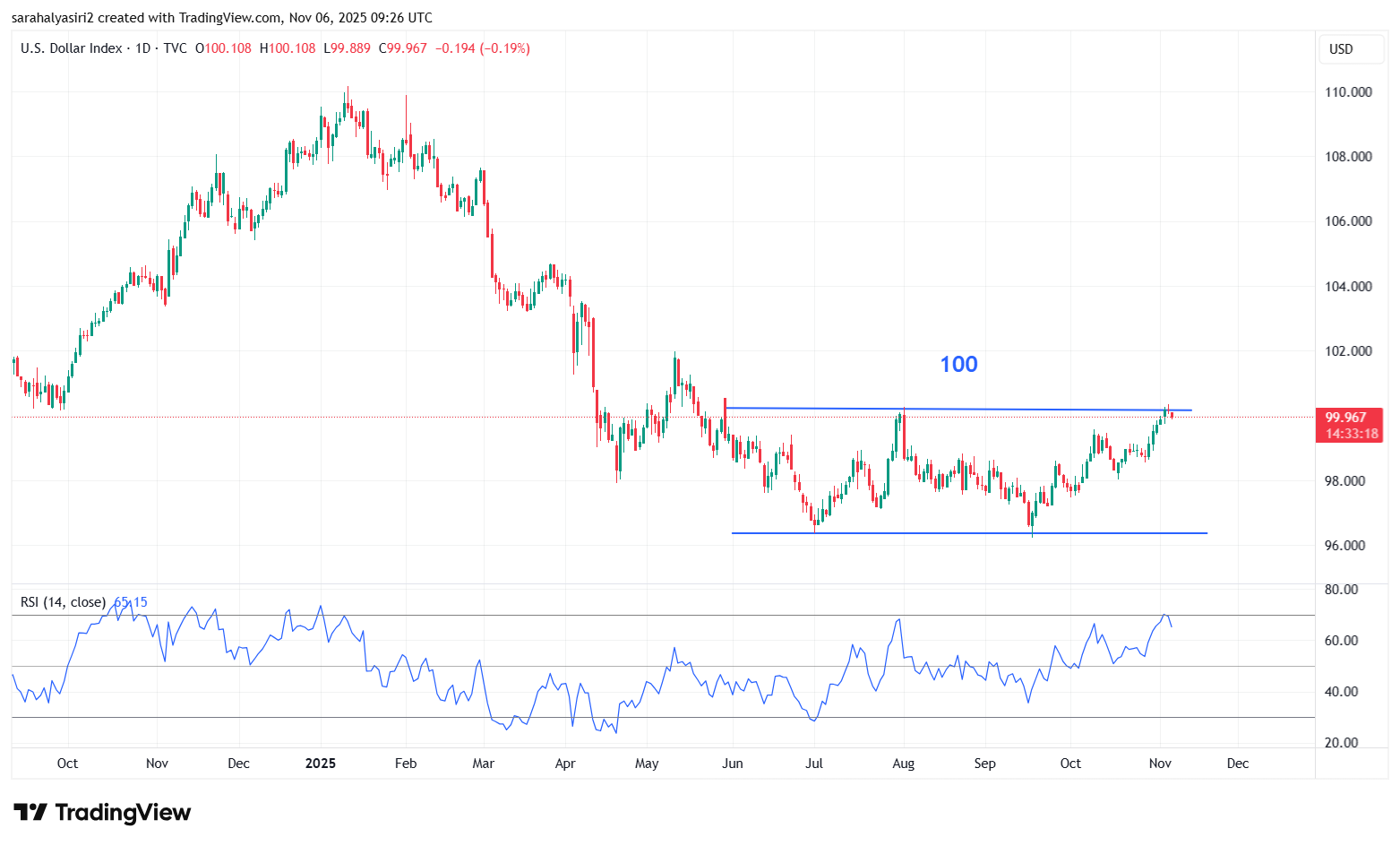
Figure 1: US Dollar Index, TradingView