




Introduction:
The current edition of the "Economic Spotlight" report covers numerous issues, including the economies of the United States, China, Japan, and others, in addition to the latest economic data and their implications for the near future.
It also highlights the latest developments in trade negotiations between the US and several countries, most notably Japan, following a weekend that brought back the threat of tariffs, both about China and steel and aluminum.
Main keywords:
The European economy awaits the European Central Bank's decision next week, with expectations of a rate cut.
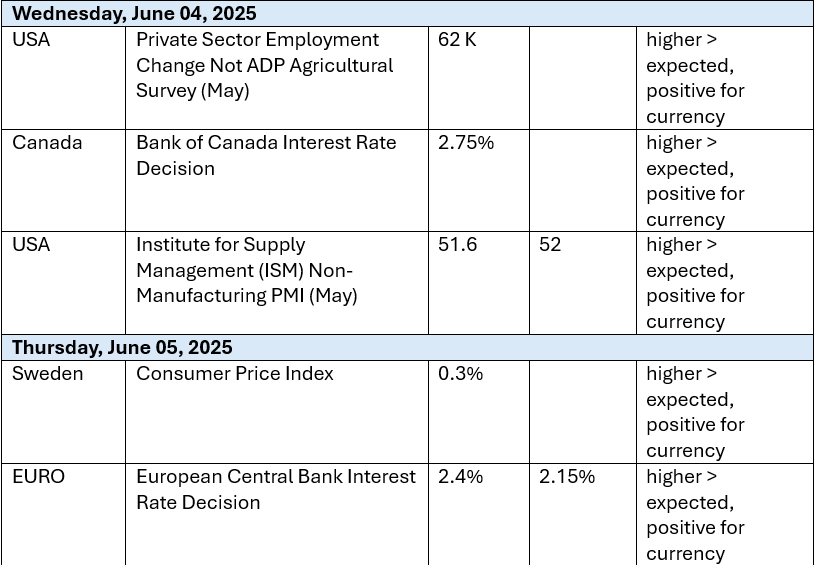
The US economy awaits important economic data related to the labor market. The Bank of Canada meets to decide on its interest rate decision.
Economic concerns surround the Japanese economy amid rising debt and concerns about a potential rise in interest rates.
Markets await Federal Reserve Chairman Jerome Powell's speech on Monday evening.
Economy Spotlight. Major Economies:
First: U.S. trade policy and economic impact!
Last week was a week full of events related to the US economy, the most significant of which was the ruling by a Manhattan commercial court that Trump's tariffs were illegal, followed by the reposition of these tariffs after an appeals court accepted the Trump administration's rejection of this ruling.
Trump, in turn, returned to threatening tariffs against China when he stated regarding the interim agreement between the US and China reached in early May, indicating that he was open to strengthening relations with Beijing. Although Trump did not specify the nature of this violation, the discussion revolved around China's restrictions on the export of rare earths.
Trump also emphasized his desire for greater tax cuts in his tax bill, which he called the "big, beautiful law."
Many countries, including the European Union and Germany, expressed their intention to accelerate their efforts to reach a trade agreement with the US. Volkswagen also announced that it was making massive investments in the US and praised the constructive trade talks with the US.
As for imports of US goods, they fell to an all-time low. This comes after a decline of about a fifth due to companies reducing their shipments to the US market due to Trump's tariffs. Total imports for April reached $276 billion, down about 20% from March.
This decline clearly illustrates the impact of US tariffs, which have shaken markets and upended trade relations with the US. This coincided with a slowdown in consumer spending growth from 0.7% to 0.2% in April.
Despite this decline, analysts believe that GDP may receive a significant boost from trade in the second quarter, which has prompted global banks, such as JPMorgan, to raise their second-quarter GDP growth forecasts.
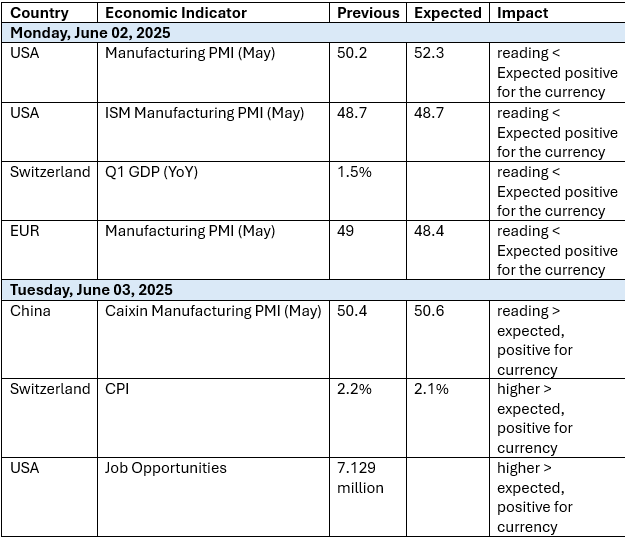
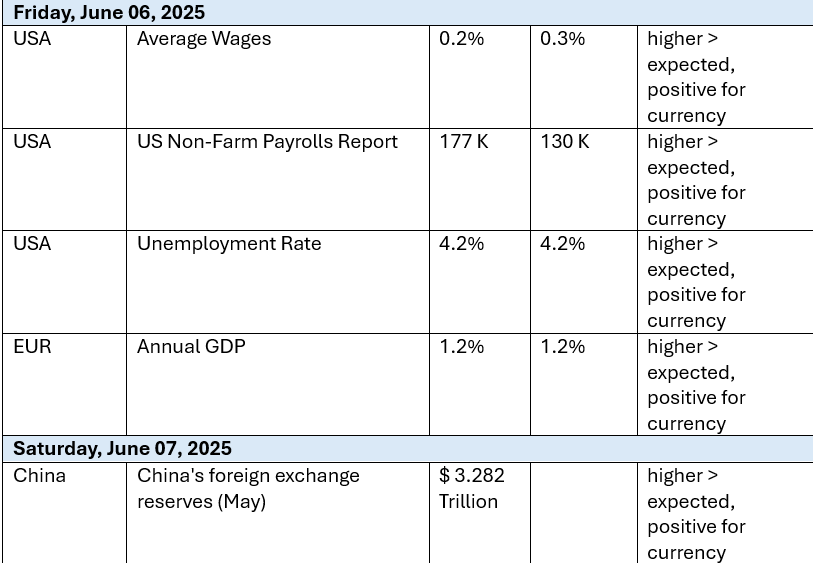
As for important economic data expected next week, it will be related to the labor market, with the release of wages, unemployment, and nonfarm payrolls reports.
Analysis now indicates that Federal Reserve policymakers may maintain their hesitant wait-and-see stance before moving towards cutting interest rates ahead of the next Fed meeting on June 18.
Second: Eurozone monetary policy and economic outlook
Markets are awaiting the European Central Bank's meeting this week, where expectations indicate that ECB officials will cut interest rates from 2.4% to 2.15%. This meeting will follow the inflation reading, which is expected to fall from 2.2% to 2.1%, approaching the ECB's target of 2%.
European Central Bank President Christine Lagarde reiterated her view that the euro could be a viable alternative to the US dollar, echoing previous statements by the Greek central bank governor, due to shifts in US economic policy.
Eurozone officials also announced that the European Commission will likely give Bulgaria the green light on June 4 to adopt the euro as a replacement for the lira starting in 2026. This follows Bulgaria's efforts to achieve this goal since joining the European Union in 2007, becoming the 21st country to join the single currency area. As for the most important economic data released from the European side, it was represented by several issues, the most notable of which was the rise in the Eurozone's economic confidence index for the first time in three months, to 94.8 in May 2025, from 93.8 in April.
Third: Japan economic challenges and trade policy
Concerns continue to surround Japan's debt-ridden economy, ahead of a hot summer of elections. Japan is struggling to maintain its spending habits as it has in the past, given the Bank of Japan's shift from negative interest rates to higher interest rates.
These concerns coincide with tariff concerns, which Japanese officials are trying to reach a satisfactory solution with the US as soon as possible.
Koji Yano, a former deputy minister of administration at the Japanese Ministry of Finance, said that Japanese officials should carefully consider the risk of rising interest rates, which could lead to a credit rating downgrade, like what happened with the US last month.
Calls for radical reforms in the Japanese economy are growing, especially with India overtaking Japan as the world's fourth-largest economy, as recently noted by the International Monetary Fund. India's GDP in 2025 is projected to reach approximately $4.187 trillion, surpassing Japan's $4.186 trillion. For its part, Japanese lawmakers approved a plan to aid businesses and consumers, which will spend $6.3 billion to protect its economy from tariffs. This coincides with Japan's rush to conclude a trade agreement that will protect the auto sector from faltering and slipping, especially since it represents a large part of its national economy. Some reports also indicated that Japanese Prime Minister Shigeru Ishiba is considering a visit to Washington to meet with President Donald Trump before the G7 summit in mid-month, a potentially positive step toward a fruitful trade agreement.
Fourth: China economic resilience and trade outlook
China's economy has maintained strong momentum, with major industrial companies recording accelerated growth in April, according to official data released last week, indicating strong economic resilience despite trade concerns. This reflects optimism about China's economy, which is now higher than at any time since 2019.
Chinese officials have emphasized that the positive trends confirm the effectiveness of the stimulus measures launched last year, which will mitigate the impact of US tariffs.
These positive data coincide with Moody's last week's affirmation of China's long-term credit rating at A1, with a negative outlook.
Economists, for their part, expect the Chinese economy to maintain stability in the third and fourth quarters of this year, given the interim trade agreement with the US and any permanent agreements that may be reached.
Economy Spotlight. Economic Calendar and What to Expect in the Markets Next Week:
Global markets will be awaiting the following economic data: