





-1776339333.webp)
What Triggered the Recent Correction of Gold Prices?
Gold prices have recently entered a clear correction phase after reaching unprecedented highs, as selling pressure pushed prices lower.
This pullback was driven by several interconnected factors:
- Rising U.S. bond yields amid heightened geopolitical and economic uncertainty.
- A stronger U.S. dollar as a safe haven, with rising demand tied to its role as the primary pricing currency in global oil trade.
- Rising expectations that restrictive monetary policy will remain in place for longer, after markets had previously priced in more than two rate cuts this year.
- Profit-taking following strong gains, as investors locked in returns after gold’s historic rally. In addition, some investors sold gold to cover losses and rebalance portfolios impacted by sharp market declines, particularly in March. As other assets weakened, gold became a key source of liquidity.
The 50% Recovery: Why It Matters
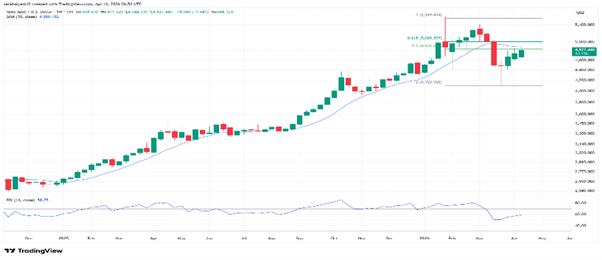
Despite the sharp correction, gold has begun to show signs of gradual recovery, reclaiming nearly 50% of its recent downward move. This rebound carries important technical implications, reflecting a return of buying momentum, especially amid ongoing uncertainty across global markets, both geopolitically and economically.
The 4,900 level is one of the key levels currently watched by traders, as it represents a pivotal point in gold’s price movement. A 50% correction of a major move is not just a number, but the point where buyers and sellers reach balance, determining the next primary direction.
In addition, this level coincides with the 10-week moving average, reinforcing its strength as a key resistance. A break above it and sustained trading beyond it could signal a shift in the medium-term direction.
Bullish or Bearish: What’s Next for Gold?
Gold is at a crossroads. Here are the key scenarios in focus.
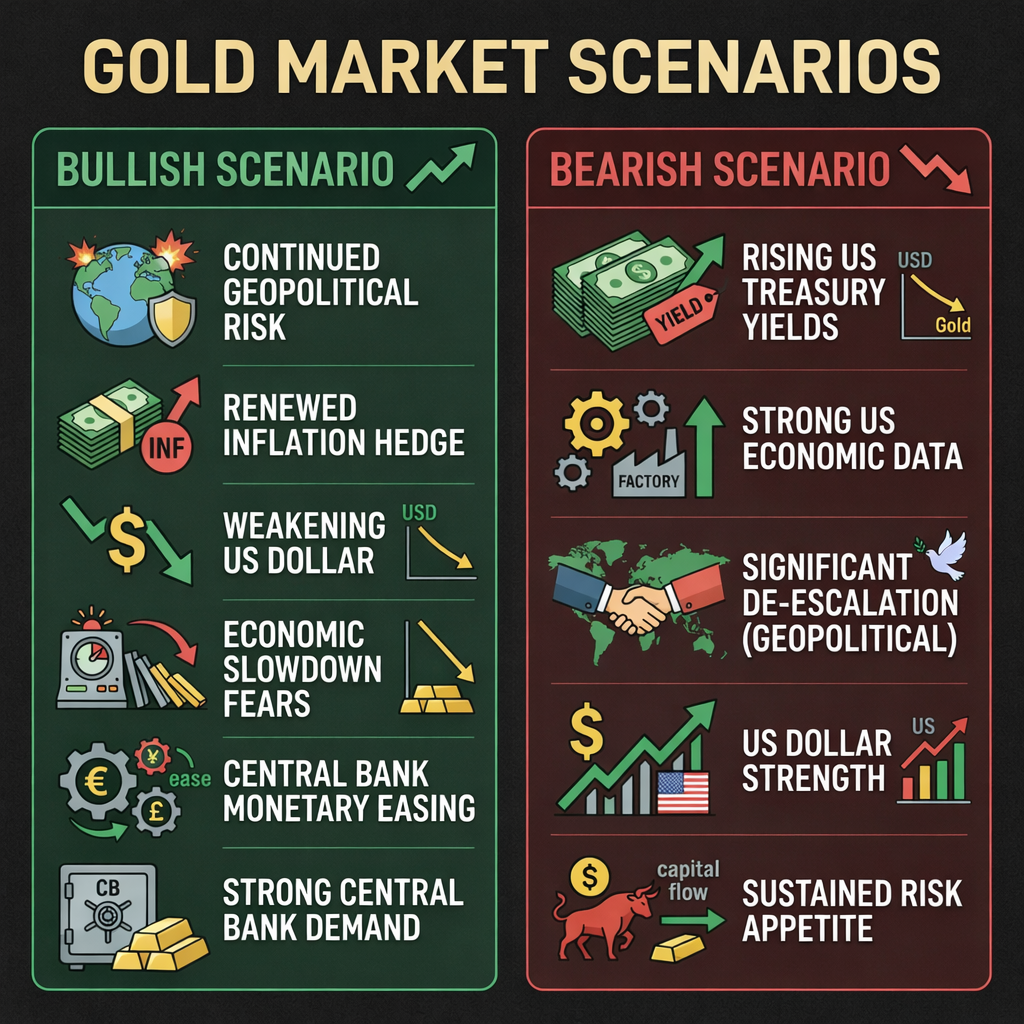
First: The Bullish Scenario
In positive scenarios, gold could rise again due to ongoing geopolitical tensions, renewed inflationary pressures, or a weakening US dollar. An economic slowdown or recession would further support higher gold prices.
Moreover, any signals from central banks indicating a slowdown in the pace of monetary tightening could boost demand for gold, as a non-yielding asset that preserves value during times of uncertainty. Additionally, continued demand from global central banks could provide additional support to prices.
Second: The Bearish Scenario
On the other hand, several factors could limit further gains or push gold lower again, most notably:
- A continued rise in bond yields.
- Strong US economic data supporting higher interest rates for longer.
- A slowdown in geopolitical tensions could reduce demand for safe-haven assets, weighing on gold prices.
Conclusion: $4,900 Remains the Key Level
Overall, gold is still at a critical stage, moving between strong support and counter pressures. The $4,900 level will remain the key to the next direction, a break above it could support further upside, while failure to move past it may bring selling pressure back, according to analysts.
-1790754997.webp)




-1789980568.webp)
