




Inside the Copper Market 2026
· U.S. stockpiling is tightening global copper supply.
· China’s Lunar New Year slowdown briefly cooled demand.
· Copper is stuck between strong support and resistance on the chart.
· A major move is building as supply stays tight and demand recovers.
Copper has made its way to one of the most important markets to watch in 2026. It’s no longer just used to make wires and pipes; it has become a real-time indicator of global growth, the energy transition, government stockpiling, and industrial confidence. Right now, copper is telling us an interesting story: tight supply, nervous demand, and a price chart at a decision point. This is exactly what attracts traders' close attention because these are moments where big moves begin.
Why Are Copper Prices So Volatile Right Now?
In late January 2026, copper prices surged to record highs, then cooled but remained elevated relative to the end of 2025. The reason for this is that the market feels tighter than usual. According to Bloomberg, the United States has quietly built one of its largest copper stockpiles (Figure 1), drawing large amounts of metal into the U.S. and reducing available supply for others. If one major buyer removed this much copper from the global market, prices would remain naturally supported, even without a sudden jump in demand.
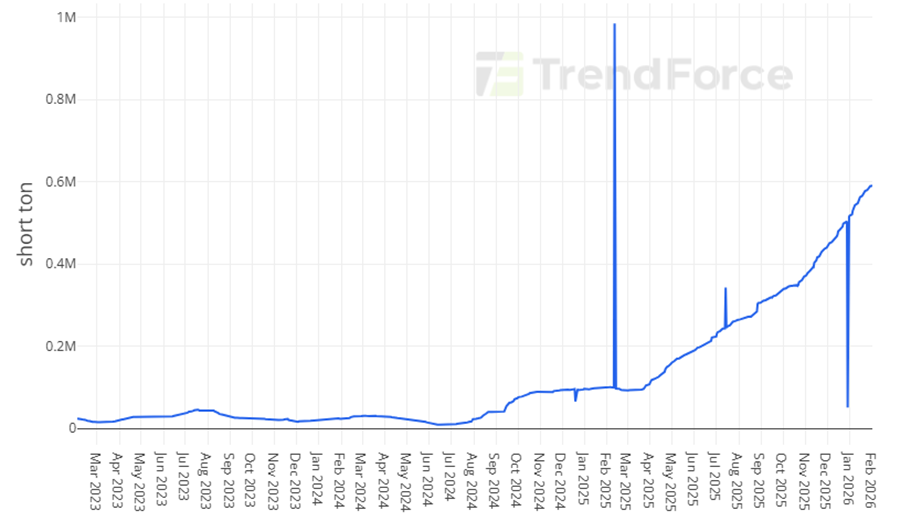 Figure 1: COMEX Copper Inventory, 2021-2026, Source: Data Track
 In parallel, China’s demand has softened temporarily. Some manufacturers extended their Lunar New Year (the biggest holiday of the year in China and most of East Asia, during which factories, construction sites, etc., shut down for a full week or more) downtime because high copper prices made buying less attractive. Because China is the world’s largest copper consumer, even a short-term pause in activity can have global effects.
However, the bigger economic story hasn’t changed. Countries such as China, the United States, Germany, and Japan remain the largest drivers of copper demand. Any shift in their manufacturing, construction, electric-vehicle production, or power-grid spending immediately shows up in copper pricing. Although China has cooled, long-term structural demand remains strong, according to analysts.
On the supply side, copper remains notoriously slow to expand. Mines take years to build, ore grades are declining, and companies such as Codelco continue to highlight the high cost of increasing output. In short, the world wants more copper than it can easily produce, and that imbalance doesn’t disappear in a few months.
Additionally, Bloomberg reported that China is tightening carbon-emission reporting requirements for heavy industries, including the petrochemical and copper industries. Tougher reporting requirements impose greater compliance pressures and potentially higher production costs, which could further limit future output.
All these forces work together to keep copper in a “tension zone,” supported yet sensitive.
Copper Price Analysis in 2026: What the Daily Chart Shows?
Technically, copper is moving inside a clear consolidation zone (Figure 2). The price has repeatedly tested the approximate $5.80 support zone, which has acted as a strong floor each time sellers pushed lower. This level also aligns with a key Fibonacci retracement, making it a natural area where buyers step in.
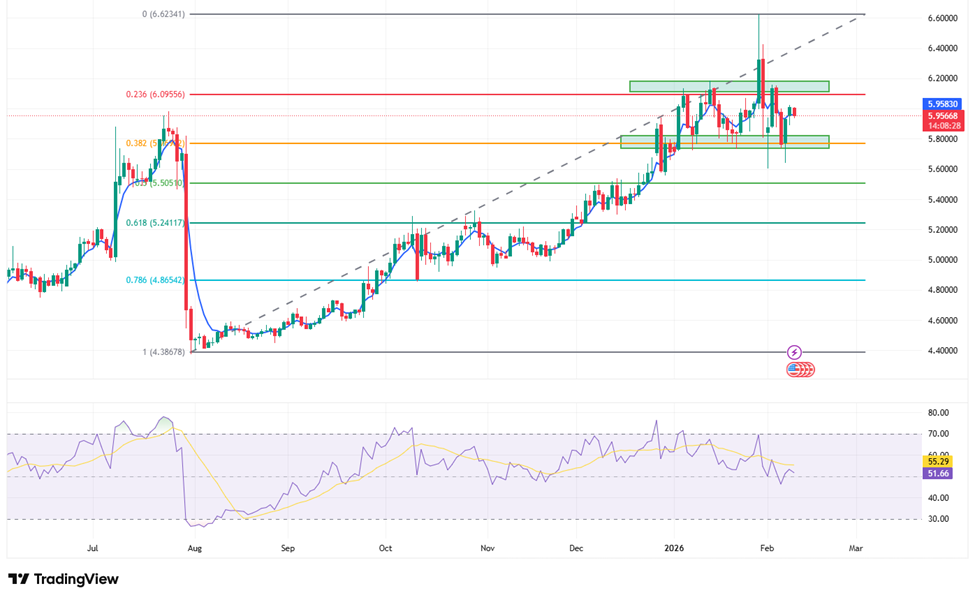 Figure 2: Copper, Daily Time frame, Source: Trading View
 Above, copper is encountering significant resistance in the $6.15–$6.20 range, where previous breakout attempts have failed. The chart shows a rising trendline beneath the price, indicating that the overall trend remains bullish, but momentum has slowed. The RSI near the middle confirms that buyers and sellers are currently balanced.
Key Bullish and Bearish Scenarios Shaping Copper’s Next Major Move
This creates a setup for a breakout or breakdown (bullish or bearish), depending on upcoming fundamentals, as per analyst analysis.
Scenario 1: Bullish Breakout
If copper holds above $5.80 and fundamentals remain tight, meaning U.S. stockpiling continues, inventories stay low, and China resumes buying, the price could retest $6.20 and break toward $6.40+. This would signal a continuation of the long-term uptrend.
Scenario 2: Bearish Pullback
If demand in China remains weak and global buyers hesitate due to high prices, copper could fall below $5.80. A break in this level could send prices toward the next Fibonacci zones around $5.52 and $5.31. This would shift the market into a deeper correction, as per analyst analysis.
In simple terms, the fundamentals will determine whether copper chooses the upper or lower path, and the chart already shows where both doors are located.
Conclusion
Copper in 2026 is being shaped by a rare combination of forces: the U.S. absorbing physical metal into a giant stockpile, China temporarily cooling demand, slow-moving mine supply, and new environmental rules tightening production costs. This is why prices are volatile and why the chart is stuck between strong support and strong resistance.
-1792060238.webp)


-1791969327.webp)
-1791876866.webp)