




-1765963880.webp)
Observing the attached chart for Brent crude, we note the following: the downtrend that began in 2023 continues, with Brent price falling from $95 per barrel to current levels near $59 per barrel at the time of writing— a decline of approximately 38%. Prices have been falling for the fifth consecutive month. Notably, Brent has now broken key support levels around $60.5. So, what are the reasons behind this decline, and what can we expect going forward?
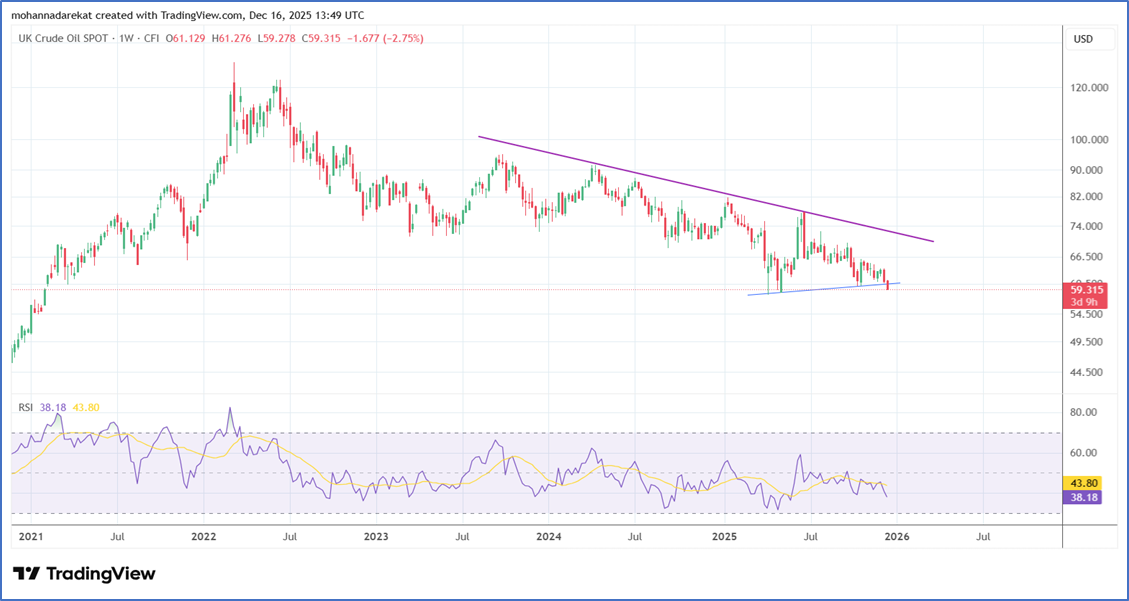 UK Crude Oil Spot - TradingView
Geopolitical and OPEC Factors Pressuring Brent Crude Prices
One of the main factors behind the price drop is market expectations of a peace agreement between Russia and Ukraine, which could increase Russian supply and further widen the market surplus. Economic data from China have also added downward pressure on prices, raising concerns about weak global demand. Data show that China’s industrial production growth slowed to its lowest level in 15 months, while retail sales recorded their slowest growth since December 2022.
Additionally, OPEC confirmed in its decision on November 2, 2025, that it would suspend planned production increases for Q1 of the coming year to review market developments and prospects. Previously, the organization had abandoned voluntary cuts of 2.2 million barrels per day, in addition to a 1.65 million barrels per day reduction. OPEC reiterated that these cuts could be partially or fully reinstated gradually, depending on market conditions.
Brent Crude Price Tests Key Support as Markets Await OPEC Intervention
Returning to the chart, Brent crude oil trading below the key support level of $60.50 suggests the potential for further price declines. This situation may necessitate direct intervention by OPEC to cut production and support prices, potentially allowing Brent to recover above the $66 resistance level. Therefore, attention will be on the upcoming OPEC meeting set to take place on January 4, 2026, as it may provide positive news for prices and help stabilize the market according to analysts.
Explore Brent Crude Trading Now!US Sanctions on Venezuelan Oil Tankers Raise Supply Concerns
U.S. President Donald Trump ordered the imposition of a blockade on sanctioned oil tankers entering or leaving Venezuela. Despite the lack of clarity surrounding how the blockade would be enforced—and whether the U.S. Coast Guard might be used to intercept vessels—the announcement alone was enough to unsettle markets. Oil prices rose by more than 1% amid expectations of a potential decline in Venezuelan exports.
In response, the Venezuelan government rejected what it described as a “shameful threat,” while investors continue to await details on how the blockade would be implemented and whether it would extend to vessels not currently under sanctions.