



-1749982407.webp)
Introduction:
This week's meetings of major central banks, from the US to the UK, dominate the economic landscape across global markets. This issue of the Financial Markets Report will review the outlook for the negotiations between the US and various global powers, and what they could mean for a return to relative economic stability. This important report also covers key developments surrounding China's preparations for its 15th Five-Year Plan, covering the period 2026-2030, as well as key issues related to the US-Japan talks.
Main keywords:
Global markets await meetings of a wide range of major central banks (the US, Japan, Switzerland, Sweden, and the UK).
Fruitful talks between the US and Japan are underway, with promising prospects for a successful trade agreement.
China continues to prepare for its next five-year plan, focusing on competitiveness, innovation, and industry.
European exports to the US economy continue to decline, and there are positive economic and investment indicators for Europe.
Economy Spotlight. Major Economies: Major central bank meetings
First, the US economy:
Last week's U.S. economic week was full of important economic and trade events, beginning with the second trade talks with China in London.
The two sides reached temporary trade agreements, resulting in China agreeing to lift restrictions on rare earth export restrictions in exchange for the U.S. allowing Chinese students to study in American schools and universities.
The latest readings for the inflation index (consumer and producer price indexes) were also released ahead of the Federal Reserve meeting this week.
Consumer prices rose less than expected, raising doubts about the possibility of further increases in future readings, especially since U.S. President Donald Trump is still moving forward with his tariffs. He stated at an event held at the John F. Kennedy Center that he would send letters with unilateral tariffs to all countries within a week and a half or two, with the goal of reaching trade agreements as quickly as possible before the expiration of the tariff suspension period, specifically on July 9.
The World Bank, for its part, lowered its forecast for US economic growth from 2.8% last year to 1.5% this year, considering the global economic slowdown caused by tariffs. The World Bank emphasized that the US economy would be negatively impacted if tariffs rose from their levels last May.
The World Bank joined the Organization for Economic Cooperation and Development, which indicated a decline in growth to 1.6%, and the International Monetary Fund, which forecast 1.8%.
Alongside these official statements from institutions, came another warning from one of the world's most prominent bankers. Jamie Dimon, CEO of JPMorgan, warned of a "real possibility" of the US economy deteriorating soon.
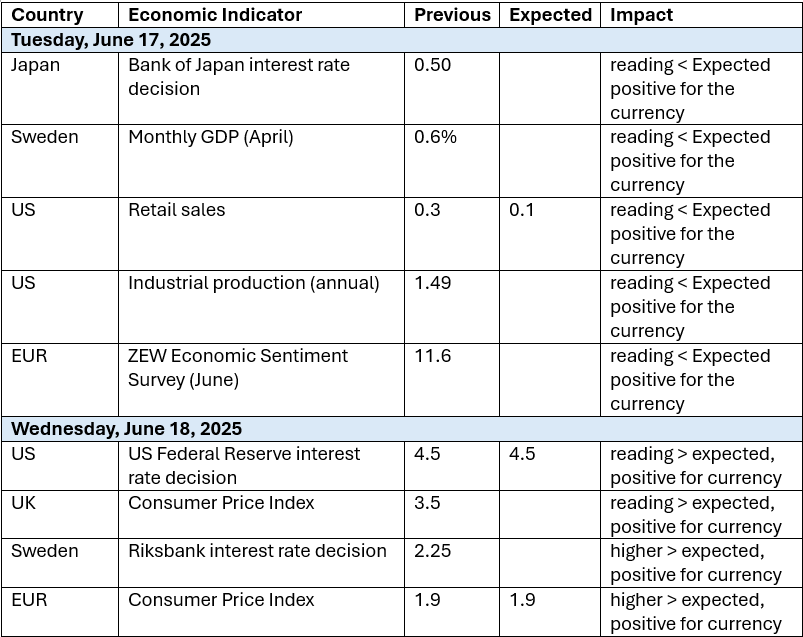
Observers are still awaiting news related to expected trade agreements with various global economies, especially after US Secretary of Commerce Howard Lutnick stated that agreements are progressing well with major economies such as India, Japan, and South Korea, while ruling out an imminent agreement with the European Union due to numerous complications. The US economy awaits the important retail sales report this week, ahead of the Federal Reserve meeting on the 18th of this month, with expectations that no interest rate cuts will be made.
Second. European Economy:
The European Union witnessed a decline in exports to the US market. The European Statistical Office announced that EU exports to the United States fell to $55 billion from $82.5 billion in the previous month. Analysts attributed this decline to US importers stockpiling goods in March, prior to Trump's tariff announcement.
This decline negatively impacted on industrial production, which contracted to its lowest level in two months, exceeding analysts' expectations. This was interpreted as a continued impact from the tariffs.
The British economy was the most affected by the round of tariffs, contracting more than expected in April, the first month of the UK government's business tax increase and the month in which US tariffs were implemented before being suspended.
This led to a record decline in exports. The situation was somewhat different for the German economy. Following its strong performance in the first quarter, when it grew by 0.4% following two consecutive years of contraction, four economic institutes indicated that they had raised their forecasts for the German economy for 2025 and 2026.
Despite this uncertainty surrounding economic data, the European Union continues to benefit from the outflow of US dollar-denominated assets, given the investment trend in European economic sectors, with the aim of diversifying amid the uncertainty facing the US economy.
Third: The Japanese Economy:
Japanese officials met with US officials, led by US Commerce Secretary Howard Lutnick and Treasury Secretary Scott Besant, in Washington, DC, as part of another round of trade talks aimed at reaching an agreement ahead of the G7 summit in Canada and the planned meeting between Presidents Donald Trump and Shigeru Ishiba.
The Japanese side confirmed that the sixth round of trade negotiations is proceeding well for both sides, in various areas such as expanding bilateral trade, non-tariff measures, and cooperation on economic security.
Japan is still seeking a written agreement from the United States that would exempt Japan from additional tariff increases, particularly in the automotive sector.
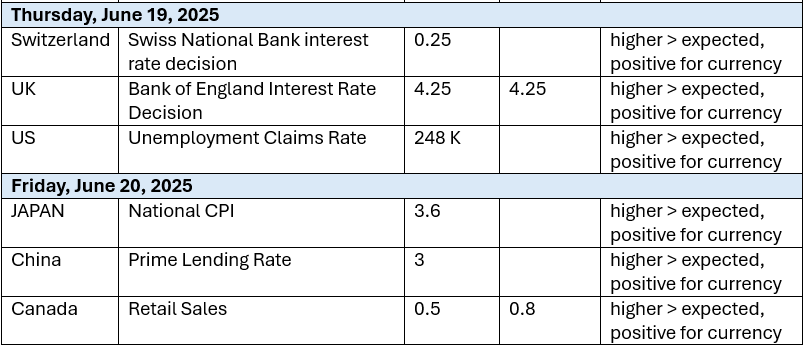
In a recent development, US President Donald Trump approved Nippon Steel's $14.9 billion acquisition of US Steel, following arduous 18 months of efforts by the companies. The most important event for the Japanese economy is the Bank of Japan's meeting on Tuesday. Expectations are that the central bank will not raise interest rates amid the turbulent economic conditions, especially since the Japanese economy will be preparing for inflation data next Friday.
Fourth: The Chinese Economy:
The Chinese economy experienced moments of tension amid the two-day talks between the United States and London. These talks resulted in the continuation of the interim trade agreement, with promises from the Chinese side to lift restrictions on rare earth exports, and the US side agreeing to accept Chinese students at American universities and colleges.
Chinese President Xi Jinping also spoke about the upcoming five-year economic plans, urging attention to the next five-year plan, which China will convene in the fall of 2025 and will cover the period from 2026 to 2030. The national economic development plan will serve as a blueprint for enhancing China's competitiveness and addressing the weaknesses exposed in its competition with the United States.
Xi emphasized the need to focus on developing the next five-year plan on improving leadership of economic and social development and deepening the laws of the socialist economy through more comprehensive and in-depth reforms, following scientific planning for the future, and seizing opportunities.
In terms of economic data, Chinese VAT invoice data indicated that the Chinese economy-maintained stability in May, with strong momentum in the manufacturing, innovation, and private sectors.
The manufacturing sector accounts for a third of Chinese companies' sales. The World Bank lowered its growth forecast for the Chinese economy, indicating a potential slowdown to 4.5% this year due to slowing pressures from turbulent global trade.
Economy Spotlight. Economic Calendar and What to Expect in the Markets Next Week:
Global markets will be awaiting the following economic data: