




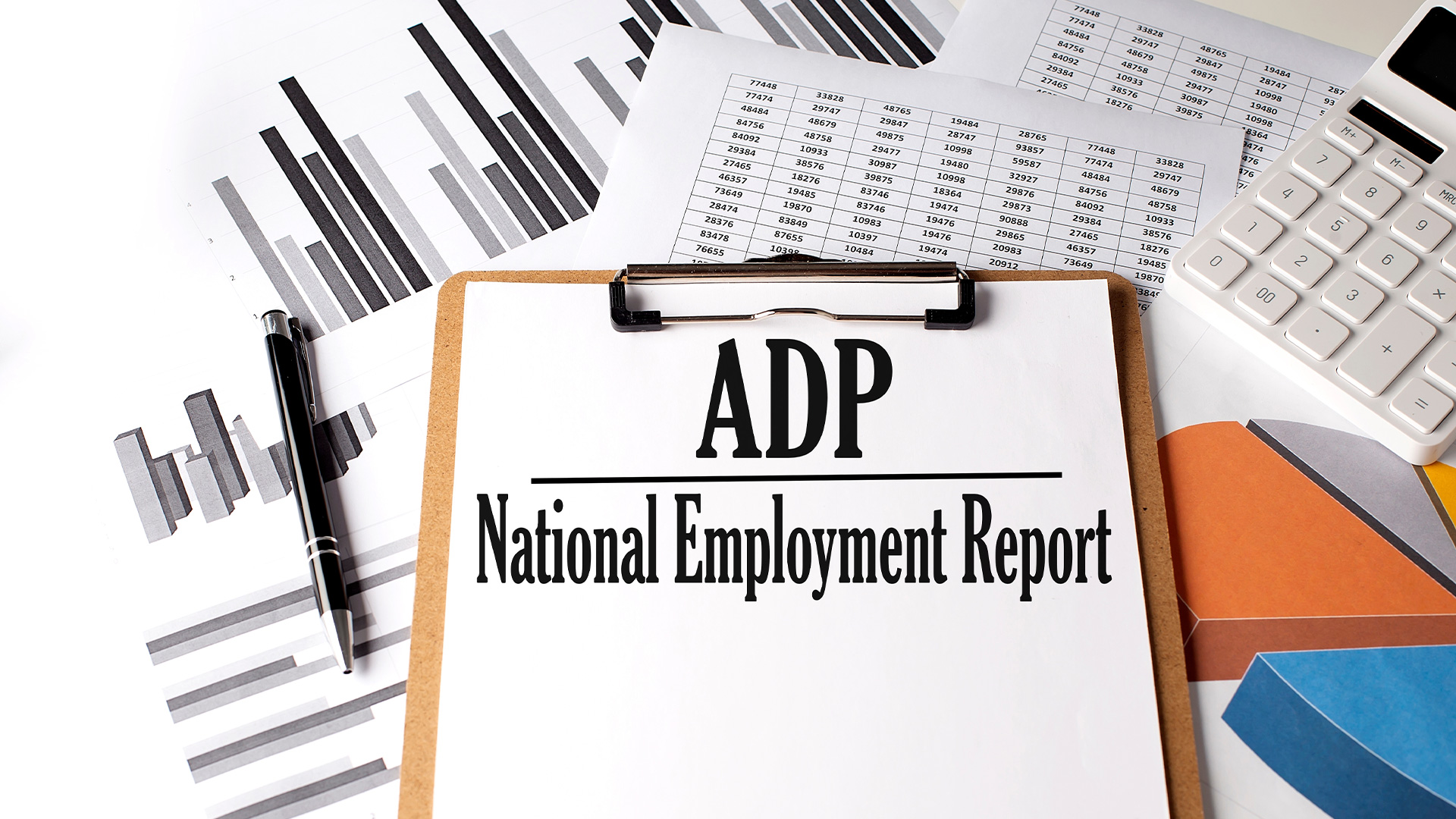
Automatic Data Processing (ADP) alongside Stanford Digital Economy lab publishes ADP nonfarm payroll usually two days before the official labor market report (Non-Farm Payroll) from Bureau of labor statistics (BLS). June 2025, ADP non-farm payroll is scheduled to be on the wire this Wednesday the 2nd of July 2025 by 4:15 GMT +4
What Is the ADP National Employment Report? And why it matters?
The ADP National Employment Report, is a monthly indicator of changes in the overall number of non-farm private jobs in the United States, based on actual, anonymous payroll data from clients of ADP, a top supplier of HRM solutions. The ADP Research Institute is responsible for producing this report.
ADP's fine-grained, anonymised, and aggregated payroll data is used in the jobs report and pay insights to give a representative view of the labor market in the private sector.
ADP serves as a leading indicator to the NFP hence it gives an early estimate of private-sector job growth using real payroll data from about 26 million workers.
Private job witnessed weakest report in over two years
In the Month of May 2025, ADP witnessed the weakest report since March 2023, with private employers adding just 37,000 jobs in May. The pace of hiring in May reached its lowest level since March 2023.
June forecast and what it might mean for the labor market
For the month of June, forecast has it that approximately 105k private sector jobs were added, this denotes a notable improvement compared to the month of May. The data report is due to be released on Wednesday, the 2nd of July by 4:15 GMT +4 (Dubai time).
In view of the data release, If the outcome aligns with forecast, sit somewhere around it or exceed expectations, the surge would signal that the labor market is regaining traction following a temporary slowdown, potentially easing concerns about weakening economic activity. A stronger print may also suggest that businesses are gaining confidence despite lingering uncertainty around interest rates, inflation, and global trade dynamics. On the flipside, a mixed data could mean that the labor market remains fragile thereby reinforcing the narrative that businesses are still cautious in their hiring decisions. This could reignite concerns about the broader health of the economy and may influence expectations around future Federal Reserve policy decisions.
Markets participants and policymakers will be on the watch out as this data print could potentially give a signal ahead of the official labor market report later this week.
-1724934015.webp)