





Intro
Brent Crude and WTI are two of the most important commodities in global oil pricing. While both are classified as high quality crude oils, they differ: which makes each unique. For traders, investors, and especially those dealing with CFDs, understanding how these benchmarks operate is very important, not just for market awareness, but for strategy.

Brent Crude is extracted from offshore oil fields in the North Sea and transported via maritime routes, making it well suited for global trading. Its accessibility by sea has helped establish it as the leading benchmark for pricing the majority of the world’s internationally traded crude.
WTI on the other hand, short for West Texas Intermediate, is produced primarily in the United States and delivered to the storage hubs in Cushing, Oklahoma. Since WTI prices tend to be more sensitive to domestic infrastructure, pipeline capacity, and inventory levels. This geographical difference has shaped their respective roles: Brent reflects broader global oil sentiment, while WTI often acts as a more direct indicator of U.S. market dynamics.
OPEC decisions play a pivotal role in shaping global oil prices by adjusting production levels, influencing supply, and signaling market direction to traders and investors.
Physical Properties and Refining Differences between Brent Crude Vs WTI
Brent is traded on the Intercontinental Exchange (ICE), while WTI is traded on the New York Mercantile Exchange (NYMEX). Both Brent and WTI are classified as light, sweet crude oils, meaning they have low density and low sulfur content, qualities that make them easier and cheaper to refine into gasoline and other products. Yet, WTI is slightly lighter and sweeter than Brent, which gives it a refining edge, especially for American refineries that focus heavily on gasoline production. Brent, has marginally more sulfur and is a bit heavier, making it more suited to diesel for example and jet fuel production in global markets. Also, Brent and WTI rarely trade at the same price. The difference between the two is known as the Brent WTI spread, and it reflects various market forces. Brent plays an important role in global oil commodity pricing as stated previously. It serves as the reference for exports from Europe, Africa, and the Middle East heading to Western markets. Because of this, it’s widely used in international contracts and by analysts tracking global energy flows. WTI, by contrast, is more relevant within the U.S. It directly influences refinery costs and local fuel prices. And that’s due to its slightly superior refining qualities and its availability within the country.
For oil & energies commodity CFD traders in South Africa, the price difference between Brent and WTI, known as the Brent/WTI spread presents an opportunity. This spread can fluctuate due to changing supply demand dynamics, geopolitical shifts, or infrastructure constraints. When it does, it creates space for speculation and hedging strategies. Looking to capitalize on movements between the global and U.S. oil markets. Charts may show similar price trends for both, but at any given moment, small differences in pricing can reveal valuable trading insights..
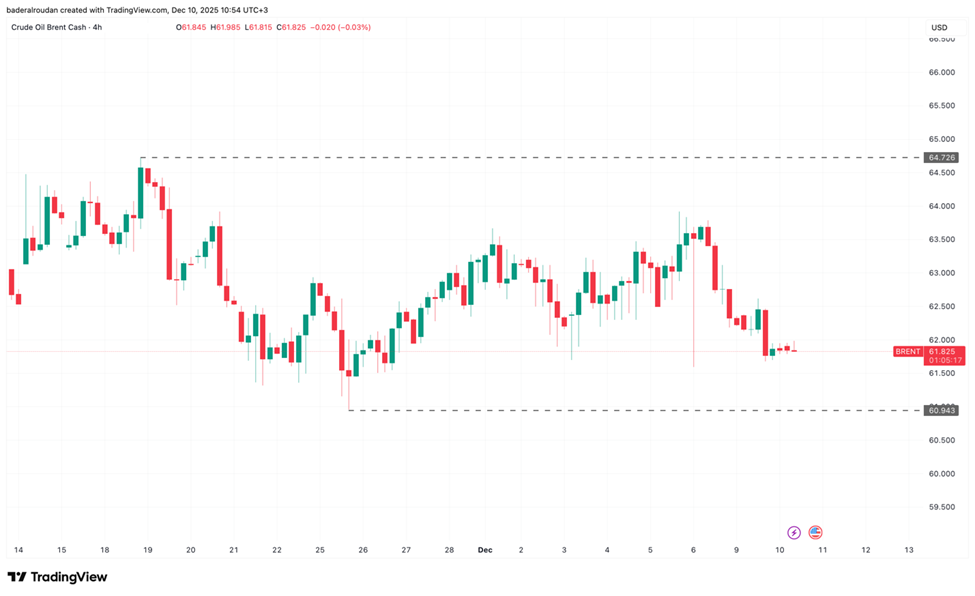 Brent Oil above priced at around $62.00
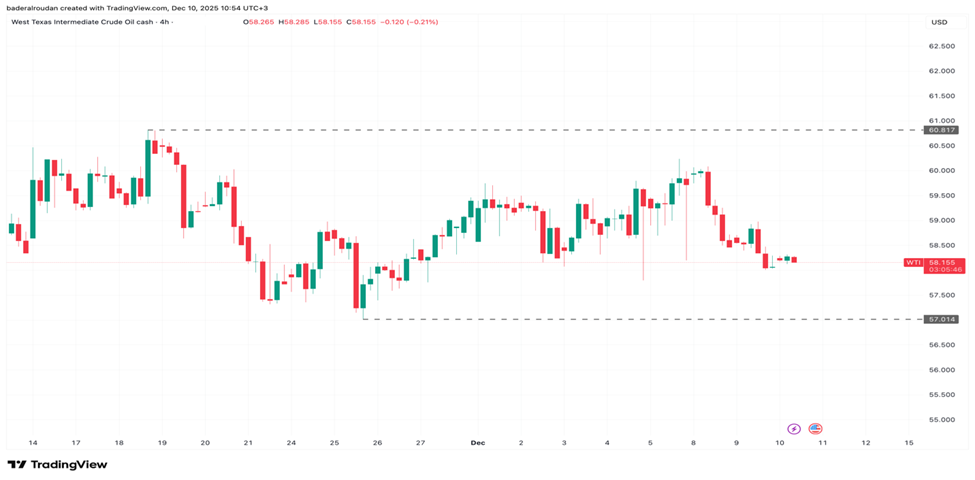 WTI above priced at around $58.00
Quick Comparison Overview Chart between Brent Crude Vs WTI:
| Benchmark | Region | Crude Quality | Market Focus | Price Influencers |
| Brent Crude | North Sea | Light, sweet | Global oil benchmark | Geopolitical risks, global demand |
| WTI Crude | U.S. (Texas/Oklahoma) | Lighter, sweeter | U.S. domestic market | Local supply chain, U.S. inventory |
Now, Why It Matters for CFD Traders?
1- Choice of Market Exposure : As stated earlier, Brent and WTI offer different types of market exposure, as a CFD trader, your choice of benchmark can shape your exposure to different economic and political forces.
2- Spread Trading Opportunities: CFD traders can capitalize on this by employing spread strategies, going long on one and short on the other, to benefit from convergence or divergence in the spread.
3- Volatility and Liquidity: WTI can be more volatile during periods of U.S. storage stress or pipeline congestion, while Brent might react more sharply to global supply chain risks or international conflict.
4- Diversification and Hedging: Because Brent is more globally influenced and WTI is U.S. centric, using CFDs on both can help diversify risk. For example, if trader expects a slowdown in global demand but strong U.S. refinery output, they might favor WTI over Brent. This multi benchmark approach gives traders more control over their portfolio exposure.
Explore Oil & Energies CFD Trading in South Africa Now!To conclude:
While Brent and WTI may both be premium quality crudes, their differences in origin, transport, physical characteristics, and market usage make them uniquely important. Brent gives you a snapshot of global oil flows, while WTI offers insights into the U.S. energy landscape.
Understanding how they move, what drives their price, and when the spread widens or contracts can be an advantage tool, whether you’re a trader in South Africa, analyst, or simply someone trying to make sense of the energy headlines.