





Space Exploration Technologies Corp. is set to announce its very first quarterly earnings figures as a publicly traded corporation when the market closes on Tuesday, August 4, 2026 — an event the financial sector has been marking down in their diaries ever since the record-setting NASDAQ listing of the space company last month. Management will host an audio-only earnings webcast for investors at 4:30 p.m. ET.
Why This SpaceX Earnings Report Matters So Much
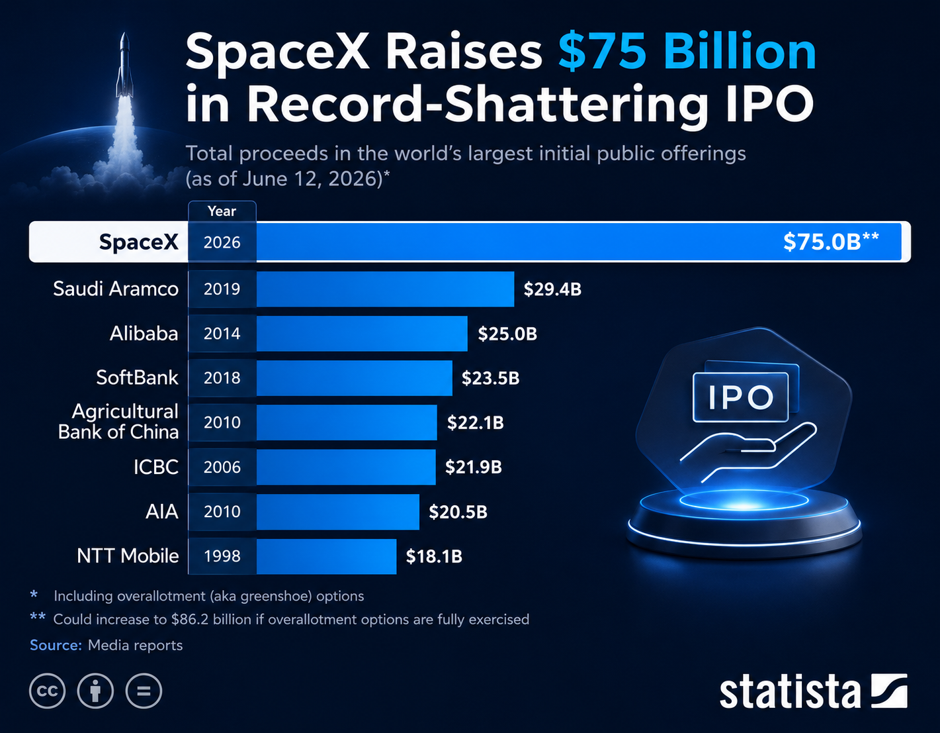
SpaceX made its public debut on June 11 for $135 per share and collected more than $85 billion in what was the largest IPO ever, hitting an unprecedented market valuation of over $2 trillion as the stock price reached nearly $225. Since then, the share price has seen a sharp decline of 45–50 percent from its all-time high. That slide has left the company valued at roughly 49 times expected revenue heading into the report — a multiple that leaves little room for disappointment.
There's also a structural catalyst tied directly to this release: two trading days after results are announced, SpaceX's unique lock-up structure allows insiders to sell up to 20% of their holdings, well ahead of the standard 180-day lock-up most newly public companies face. That means Tuesday's earnings numbers won't just set the narrative — they'll set the stage for a wave of new share supply hitting the market almost immediately.
Key Numbers Investors Will Be Watching in SpaceX's Earnings Report
In the first quarter of 2026, SpaceX earned revenues of $4.69 billion while posting a net loss of about $4.28 billion, following a full-year loss of around $4.9 billion in 2025. While the company has been showing losses on paper, its underlying cash flows from operations have remained positive — both for the year and in the first quarter — indicating the core business model is funding its costly expansion rather than relying on outside financing.
1. Starlink Subscriber Growth and Margins
At the close of the first quarter, Starlink had reached a subscriber base of 10.3 million spread across 160 countries — twice the number recorded in the same period last year. Investors hope to see this growth trend continue without any reduction in average revenue per user (ARPU).
2. AI Infrastructure Spending
Since folding xAI into its operations earlier this year, SpaceX has poured billions into orbital and terrestrial compute buildout. Wall Street wants clearer guidance on capital expenditure plans and a realistic timeline for monetizing enterprise AI contracts, since this spending has been the single biggest drag on near-term profitability.
3. Starship Economics and Launch Cadence
The long-term bull case for SpaceX stock depends on shifting heavy payloads from the workhorse Falcon 9 fleet to Starship. Faster turnaround times, lower cost per kilogram to orbit, and a steady launch cadence will all be read as signs the program is maturing on schedule rather than slipping further behind.
What Would Move SpaceX Stock After Earnings according to analysts
Given the stock's steep pullback since its post-IPO peak, the bar for a positive reaction may be lower than the trillion-dollar valuation suggests. A report showing losses growing in line with — not faster than — investment spending, paired with continued Starlink subscriber and margin strength, would likely be read as confirmation that the underlying business is sound even if losses persist.
Conversely, any sign that Starlink monetization is stalling, or that AI spending is accelerating without a corresponding revenue path, could reignite the selling pressure that's defined SpaceX stock since its market debut.
With the lock-up expiration adding fresh share supply into an already jittery market, Tuesday's report isn't just an earnings release — it's the first real test of whether SpaceX's public-market valuation matches its private-market hype.
-1791281116.webp)



-1790847824.webp)