





In 2025, artificial intelligence (AI) is everywhere, actually AI was introduced way back in the 1990s, correcting a word on word documents, is considered AI, today you can find it in headlines, investment portfolios, product launches, and economic forecasts. What started as a wave of curiosity has evolved into a full blown investment burst. Valuations are surging. Big tech is spending at historic rates. Entire industries are rethinking how they operate.
As excitement around AI hits new highs, comparisons to the dot-com bubble of the late 1990s are becoming hard to ignore. Is this the beginning of a true technological revolution, or are we witnessing the rise of another overhyped, speculative bubble?
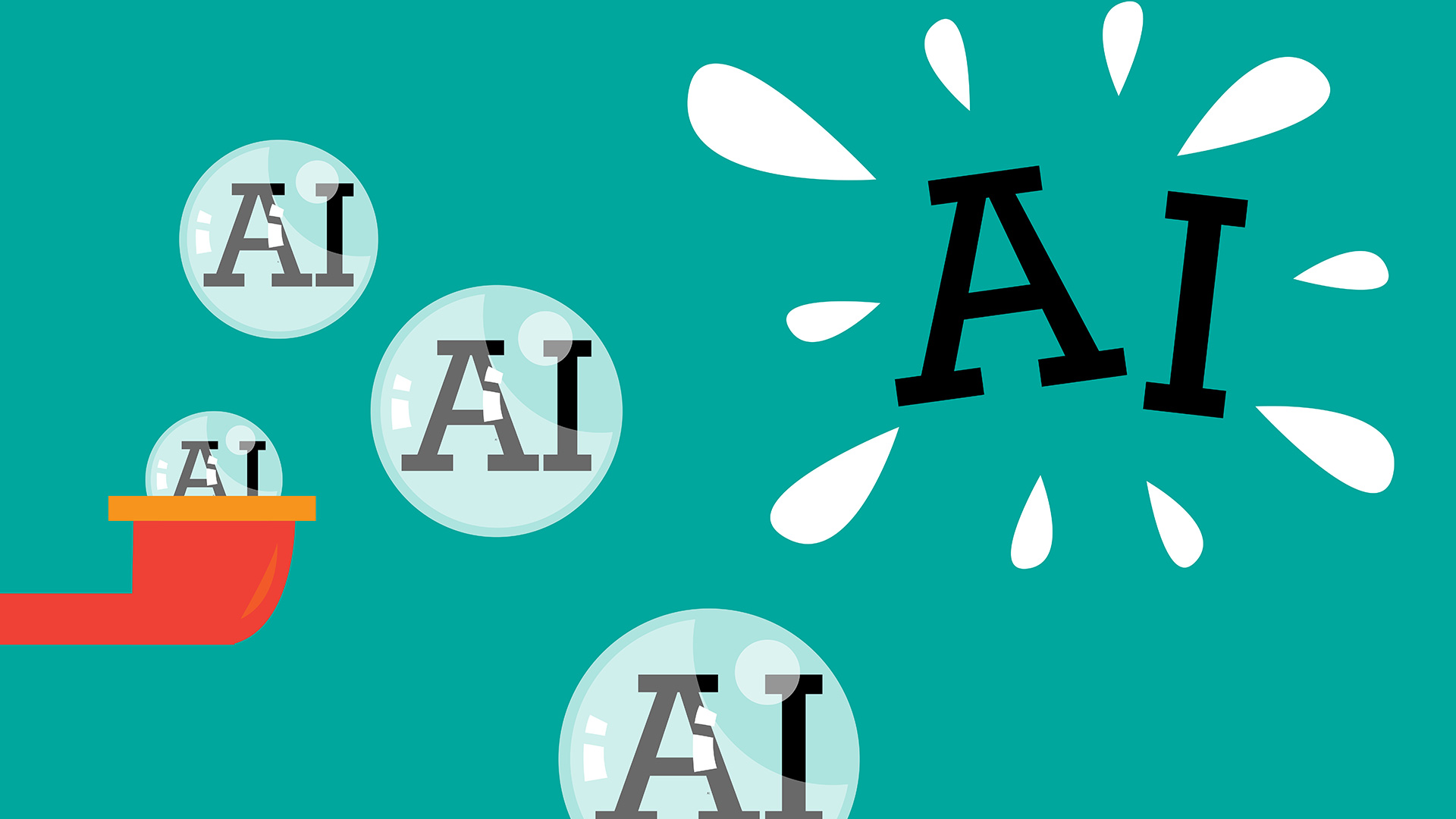
What’s Really Fueling AI in 2025?
Let’s break it down and look closely at what’s actually powering AI in 2025.
The first thing to understand is how much money is being poured into it. AI is no longer just a research idea, or a demo on stage, it’s become a central investment strategy for some of the world’s largest and most powerful companies. Companies are investing in the entire ecosystem: from massive data centers to specialized AI chip. The speed, size, and intensity of the spending surge have already surpassed what we witnessed during the internet boom. Even at the height of the dot-com bubble, capital wasn’t deployed this rapidly or at this scale. Today, AI is no longer just a promise, it’s an economic engine, each company is releaseing a powered AI tool each week and competing.
But this wave of investment isn’t being made blindly. What truly separates the AI boom of 2025 from the speculative tech surges of the past is the level of real world implementation already underway. Unlike the late ’90s, where many startups were chasing web traffic without clear revenue plans, today’s AI projects are grounded in actual use cases. Companies are already deploying AI to solve problems, drive efficiency, and unlock new capabilities. Banks are integrating AI chatbots to manage thousands of customer inquiries with near human fluency. Medical organizations are running AI assisted diagnostics that can detect diseases earlier and more accurately. Factories are embedding machine learning into supply chains to predict breakdowns, automate quality control, and trim costs.
Why This AI Boom Differs From the Dot-Com Bubble
AI isn’t just a blueprint anymore. It’s operational, it’s measurable, and in many cases, it’s delivering results that were impossible with traditional systems. That’s what makes this moment so different. While the tech is evolving fast, its business impact is being felt in the present, not just promised in the future.
Another major reason this doesn’t feel like just another bubble, at least not yet, is the financial strength behind the companies leading the charge. In the dot-com era, the stock market was flooded with overhyped IPOs from startups burning through investor cash with no profits in sight. Many had cool names and dreamy visions, but not much else. This time, the leaders in AI are companies like Microsoft, Nvidia, Alphabet, Amazon, Ali baba, giants with strong balance sheets, predictable revenue, and decades of proven execution. More importantly, their investments in AI are not isolated projects. They’re strategic extensions of existing platforms. AI is being embedded into operating systems, cloud platforms, enterprise software, and advertising tools.
Still, none of this makes the current momentum immune to risk. Every tech boom comes with its own form of overexcitement, and AI is no exception.
Dot com bubble vs AI bubble: Is the AI Hype a Bubble in Disguise?
Despite the current hype, a growing number of market watchers are beginning to raise cautious flags. And to understand why, it helps to revisit history. Back in the late 1990s, the internet was hailed as the future, and rightfully so. It was a groundbreaking force that changed how we shop, communicate, and consume information. Investors couldn’t get enough of internet stocks. Startups with “.com” in their name skyrocketed in valuation, even if they had no clear path to making money. By early 2000, the bubble popped. Dozens of companies folded. Investors lost billions. The Nasdaq shed more than 75% of its value. But the technology, the internet itself didn’t disappear. That’s what makes today’s AI hype feel eerily familiar, and likely dangerous.
Explore Stocks Trading Now!Despite the similarities with the dot come bubble in early 2000, this AI cycle has a few factors working in its favor, ones that were missing during the dot-com bubble.
- The players are seasoned: This isn’t a wave of unproven startups. The companies pushing the envelope have the scale, the infrastructure, and the customer base to monetize AI directly.
- The spending is grounded in real assets: From AI-specific chips to GPU clusters to cloud data warehouses, today’s investment isn’t just marketing hype, it’s physical, measurable infrastructure.
- Revenue is already flowing: Many AI services are already generating income. Enterprises are paying for smarter tools, faster processes, and more automation. And the tech giants are delivering.
Still, not everything is solid. Some cracks are beginning to show.
- ROI is still uncertain: Just because a company uses AI doesn’t mean it’s profitable. Many projects are experimental and may never scale.
- Small players are at risk: While the tech giants can afford to experiment, smaller firms betting heavily on AI without clear returns may struggle.
If the Bubble Pops ‘IF’ Then What?
Let’s say we do hit a tipping point, a sharp correction, a pullback, or even a crash in AI stocks could likely occur, what would that mean? Just like the internet survived the dot-com crash, AI will continue to evolve. But what it will do is separate the real innovators from the pretenders. Companies that overhyped and underdelivered will fall away. Capital will flow toward more sustainable business models.
The AI wave in 2025 is part breakthrough, part bubble, and part business revolution. It’s not just one thing, and that’s what makes it hard to define. But one thing is clear: this is not a passing trend. Whether you’re a trader, a founder, or just someone watching from the sidelines, this is a story worth paying attention to, so stay curious and stay grounded. And remember, behind every boom, there’s a filter for truth.