



-1749465392.webp)
Introduction:
US-China trade talks and turbulent U.S. inflation indicators dominate the economic landscape across global markets, as covered in this issue of the Economic Spotlight Report. We await the outcome of the negotiations between the world's two largest economies and what they could mean for a return to relative economic stability.
Also, we examine the most prominent economic indicators from Japan, which continues to experience economic turmoil despite a contraction below expectations.
Meanwhile, despite the trade negotiations between the US, China, and Vietnam, and the possibility of some details being released with some countries at the end of this week without being disclosed, markets are keenly awaiting the inflation data to be released by the US before the next Federal Reserve meeting on the 18th of this month.
Main keywords:
The US and China begin trade talks at a secret location in London.
Markets await US inflation data.
Japan records less-than-expected contraction, but risks remain.
China's economic situation threatens to worsen the impact of US tariffs.
Economy Spotlight. Major Economies:
First, the US economy: U.S. Inflation Indicators Take Precedence!
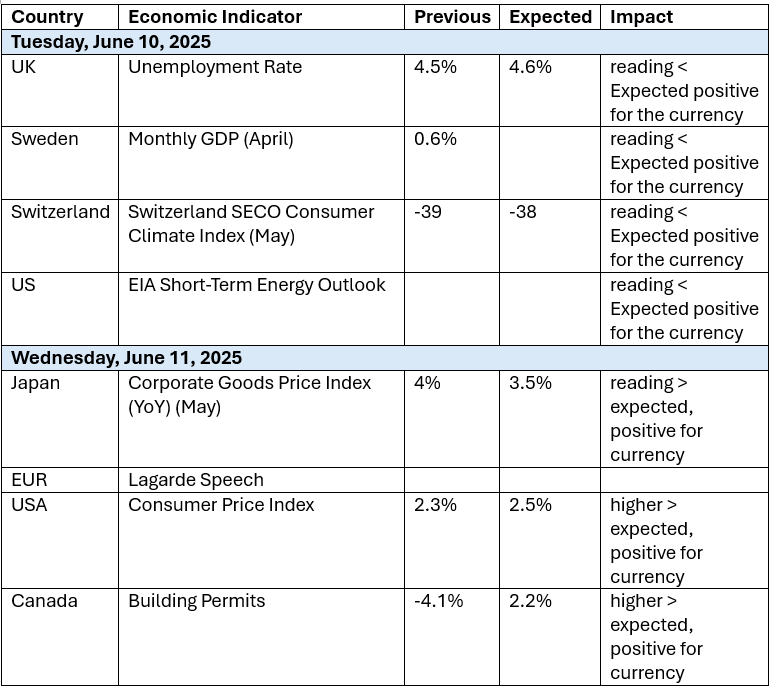
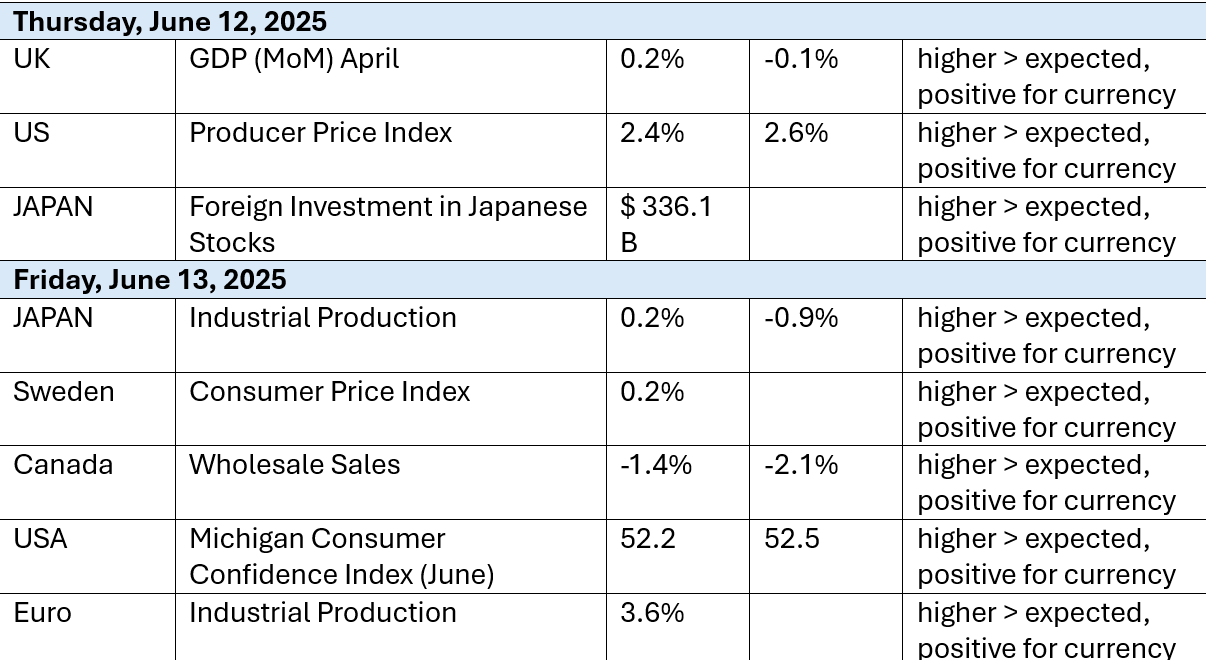
The US economy is awaiting this week's inflation data, represented by the consumer and producer indexes, with both likely to return to an upward trend. The consumer price index is expected to rise from 2.3% to 2.5%, while producer prices are expected to rise from 2.4% to 2.6%.
This data comes after a busy week of economic data related to the labor market, which proved to be relatively stable, potentially giving the Federal Reserve some breathing room to complete its interest rate cuts.
Last week, the Organization for Economic Cooperation and Development (OECD) also lowered its forecast for US economic growth for the current year to 2.9%, compared to a previous forecast of 3.3%. This was due to US trade barriers, ongoing trade tensions, and uncertainty surrounding the US economic situation.
The lower forecast for the US economy coincided with those of JPMorgan, whose chief global strategist, David Kelly, warned of the possibility of a US economic slowdown despite encouraging US labor market data. Regarding trade tensions, markets are awaiting a secret meeting between the US and China to discuss the turbulent trade situation between the two largest economies in London, at an undisclosed location. This is in the hope that satisfactory solutions will be reached to restore relative stability.
Last weekend, US President Donald Trump indicated positive signs regarding constructive talks with China regarding rare earth minerals and increasing their exports. This coincided with a Chinese economic indicator: China's rare earth exports rose by 23% in May despite export restrictions.
The US is also preparing to hold trade talks with Vietnam, amid growing demand from US companies to remove the 46% tariffs imposed on Vietnam, the second highest rate after China for an Asian country subjected to Trump's tariffs on April 2.
Second. European Economy:
The European economy concluded half of its important meetings for 2025, when the European Central Bank met to decide on its eighth interest rate cut, bringing interest rates to 2%. This came after inflation rates fell below the target rate (25) for the first time in 2025.
Despite a slight improvement in consumer sentiment in the European Union, concerns continue to cast a shadow over the economic outlook for the Old Continent. The Organization for Economic Cooperation and Development lowered its forecast for European economic growth to 0.9%, compared to previous forecasts of more than 1%.
For her part, European Central Bank Executive Board member Isabel Schnabel said that the time seems ideal to strengthen the global role of the euro, given global investors' interest in European markets, which reinforces the statement made by European Central Bank President Christine Lagarde last week. Analysts also point to the importance of the current period for the European region, particularly in terms of the tourism season, which will contribute to improving economic prospects in the coming periods, which could have positive implications for labor markets, productivity, and sales.
The European economy awaits some of the most important economic data at the end of this week, represented by the trade balance statement, which is expected to reduce the surplus to $20 billion. This is in addition to industrial production data, which is expected to decline due to the concerns experienced by European companies in general.
Third: The Japanese Economy:
The Japanese economy recorded a contraction in GDP for the first quarter of this year, less than expected, recording a contraction of -0.2% compared to expectations of -0.7%. Despite this relatively low contraction compared to expectations, analysts continued to warn that the Japanese economy was losing momentum even before the US imposed its tariffs. The Japanese economy also witnessed a positive economic indicator, represented by a 0.1% growth in private consumption, which represents more than half of the Japanese economy. Meanwhile, capital expenditure in GDP, the main measure of strong private demand, rose from 0.6% to 1.1%, although this was lower than the previous forecast of 1.4%.
Japan is still discussing with the US the possibility of negotiating lower tariff rates than those imposed on it (24%), to save its vital sectors from major economic problems, especially the automotive sector, which still faces 25% tariffs from the US market, the main market for Japanese exports.
The key to assessing the economy is monitoring both real-time data and the state of negotiations to inform policy decisions.
Fourth: The Chinese Economy:
China's export growth slowed to its lowest level in three months in May, attributed to the effects of US tariffs, while factory exports contracted to their worst level in two years. Analysts point out that this data increases pressure on the Chinese economy, which is trying to revive itself internally to counter external pressures.
Customs data also showed that China's exports to the US market fell by 34.5% year-on-year in value terms, the largest decline since February 2020. Chinese customs figures also indicate that exports rose by 4.8% in May, compared to the 8.1% they achieved in April.
Analysts indicated that this decline is due to the significant momentum that Chinese exports to the US experienced before Trump imposed his tariffs in early April.
The most significant challenge facing China remains the decline in domestic consumption, evidenced by the consumer price index contracting to -0.2% month-on-month and -0.1% year-on-year, along with a notable contraction in the producer price index to -3.3%. These data may indicate a continued decline in prices, which is not encouraging for Chinese companies and producers.
Economy Spotlight. Economic Calendar and What to Expect in the Markets Next Week:
Global markets will be awaiting the following economic data: